Why No HUD Gameplay Transforms Survival Horror into a True Test of Nerve
There is a moment in every good survival horror game when you realize the interface is a crutch. You glance at a health bar, a mini-map, or an ammo counter and you feel safe. You know where danger is, how much punishment you can take, and whether you have the resources to fight back. Strip that away, and the whole experience changes. The screen becomes a window into a world where information is scarce and every sound, every shadow carries weight. That is the power of no hud gameplay. It is not just a visual preference. It is a different way to play, one that demands more from you and gives back a deeper sense of immersion.
Alien Isolation is the perfect example. The game already leans heavily on atmosphere. The claustrophobic corridors of Sevastopol station, the flickering lights, the distant clatter of a working joe. But when you remove the HUD, you lose your safety net. You cannot see your health, your ammo capacity, or the direction of your objective. You have to rely on your own senses and memory. That shift turns a tense game into a genuinely harrowing one. And for players who want the purest survival horror experience, no hud gameplay is the only way to go. It forces you to treat the game world as real, because you no longer have a layer of abstraction between you and the terror.
The Difference Between Playing and Surviving
With a standard interface, Alien Isolation is still a challenging game. The Xenomorph is relentless, and the androids are unnerving. But you always know where you stand. A red flash tells you that you are hurt. A beep warns you that the motion tracker has picked up movement. These are conveniences that make the game playable for a broad audience. They also keep you at a distance. When you turn off the HUD, you lose that distance. You no longer see a health bar. You see Ellen Ripley limping, breathing hard, clutching her side. You infer her condition from her animations and her audio cues. That is a different kind of engagement. It is not about reading numbers. It is about reading the character.
The same goes for resources. Without an ammo counter, you must keep mental track of every shot you fire. You find yourself counting rounds as you reload, checking the weapon model, listening to the click of an empty chamber. That scarcity becomes real. You hesitate before pulling the trigger because you are not sure how many bullets you have left. In a standard playthrough, you might spray and pray. In a no hud gameplay session, you conserve. You think twice. You rely on the torch more often, because it does not consume ammo and it reveals danger just as well, if not better, in tight spaces. The torch becomes a survival tool, not just a convenience.
Nightmare Difficulty and the Removal of Save Stations
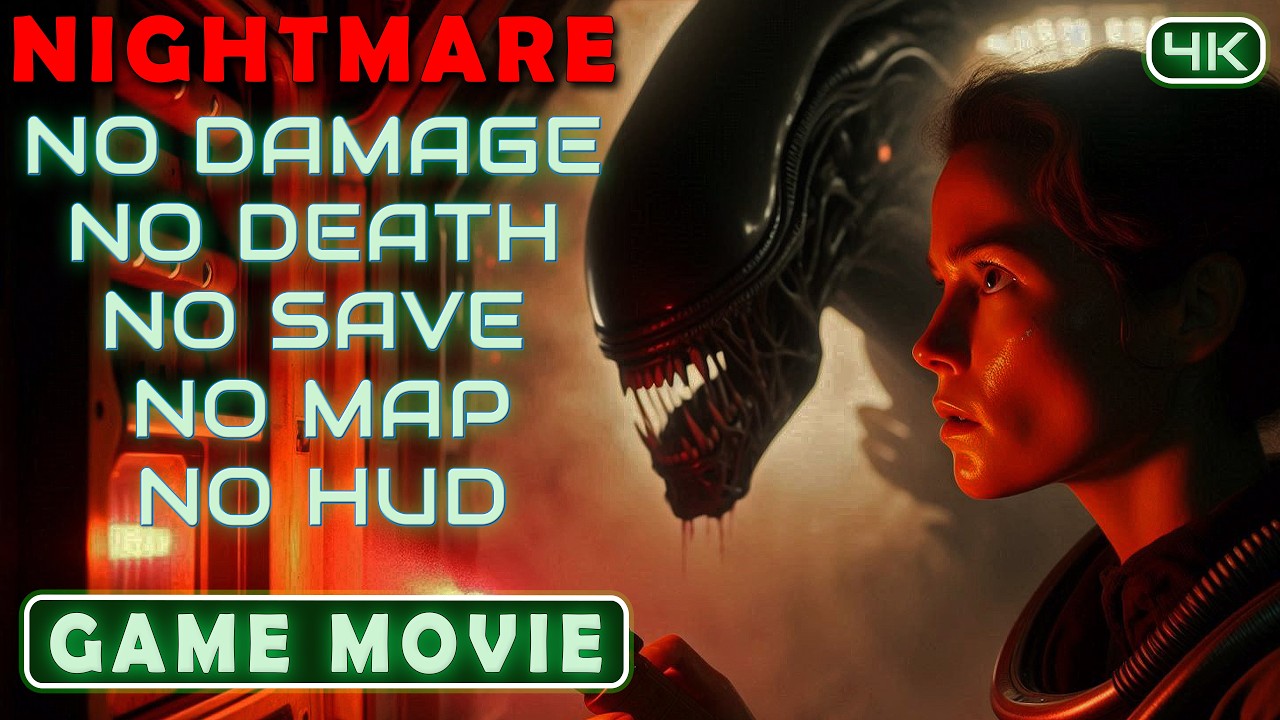
Now add Nightmare difficulty to the mix. Enemies are tougher, the Xenomorph is more aggressive, and resources are scarcer. The game already punishes mistakes harshly. But if you combine Nightmare difficulty with no hud gameplay, you create an experience that is almost unbearable in the best way. You cannot rely on save stations to bail you out. In a no death, no save run, every encounter is life or death. You learn the layout of Sevastopol not by checking a map but by exploring, by memorizing corridors and ventilation ducts. You learn which rooms have hiding spots, which cabinets are safe, and which desks will get you killed when the working joe patrols through.
The hiding mechanics become a lifeline. Without a HUD, you cannot see the "hidden" icon that tells you when you are safe. You have to judge by the enemy's behavior. You watch the Xenomorph's head turn, listen to its breathing, wait for it to move past before you creep out. That is tense. It is also incredibly rewarding when you pull it off. There is no feedback loop telling you that you did well. The game just lets you live, and that is enough. The absence of feedback makes every success feel earned. You are not following prompts. You are surviving through instinct.
Cinematic Playthroughs and the Art of Observation
There is a growing community of players who record no-commentary playthroughs of survival horror games. These are not speedruns or guides. They are cinematic playthroughs that treat the game as a piece of interactive film. 4K resolution helps, of course. The lighting in Alien Isolation is gorgeous, from the cold blues of the medical bay to the warm, sickly glow of the cultured mushrooms in the grow rooms. But the real magic comes from the absence of interface clutter. When you watch a no hud gameplay video, you are seeing exactly what the player sees. No health bar, no quest markers, no objective text. Just the environment, the character, and the monsters.
That purity makes the horror more accessible to viewers. They are not distracted by meters and icons. They are drawn into the world. They notice details that might otherwise be lost: the way the Xenomorph's tail drags across the floor, the hum of the Samson, the subtle changes in Ripley's posture as she becomes more fatigued. These are the elements that make Alien Isolation a masterpiece of survival horror, and they shine brightest when the interface steps out of the way.
Practical Tips for Playing Without a HUD
If you want to try no hud gameplay yourself, start slow. Do not jump straight into Nightmare difficulty with no saves. That is a recipe for frustration. Instead, try a normal playthrough with the HUD turned off. You will quickly discover which tools you miss the most. For most players, the motion tracker is the hardest to lose. It gives you a sense of the Xenomorph's location, which is invaluable in a game where one wrong turn can mean death. Without it, you need to rely on sound. The game's audio design is exceptional. You can hear the Xenomorph moving through ventilation ducts. You can hear the working joes stomping down metal corridors. Train your ears. They become your best tool.
Another tip: learn the layout of each area. In a standard game, you might follow a waypoint marker. Without a HUD, you have to read the environment. Sevastopol is well-designed. The lighting, the signs on the walls, and the architecture all guide you naturally if you pay attention. Look for emergency lights. Follow the main corridors. Avoid dead ends. Memorize the locations of save stations, even if you do not plan to use them. They serve as landmarks. The medical bay, for example, is a central hub. If you get lost, find your way back there and reorient yourself.
Finally, manage your resources carefully. Ammo capacity is limited, and without a HUD, you cannot see how many bullets you have left in a magazine. Count your shots. Reload only when you are sure you are safe. Use the torch to conserve ammo. It does not attract the Xenomorph unless you shine it directly at it for too long. And remember that hiding is almost always better than fighting. The game is called survival horror for a reason. You are not a soldier. You are Ellen Ripley, an engineer who is out of her depth. Act like it.
The Deeper Appeal of No HUD Gameplay
At its core, no hud gameplay is about trust. Trust in the game's design, trust in your own skill, and trust in the story. When you remove the interface, you are saying that you believe the game will communicate what you need to know through its world. And Alien Isolation does. The game is fair, even on Nightmare difficulty. It gives you audio cues, visual tells, and environmental clues. The challenge is learning to read them. That learning process is what makes no hud gameplay so satisfying. It is not about making the game harder for the sake of difficulty. It is about engaging with the game on its own terms, without the training wheels.
For the survival horror genre, this is a natural fit. The genre is built on vulnerability, uncertainty, and resource scarcity. A HUD undercuts all of those things. It gives you certainty. It tells you exactly how vulnerable you are. By turning it off, you restore the uncertainty that makes horror work. You do not know if you can survive one more hit. You do not know if the Xenomorph is right around the corner. You have to guess, and you have to live with the consequences of those guesses. That is terrifying. It is also exhilarating. And it is the reason why so many players return to Alien Isolation years after its release, looking for new ways to challenge themselves.
No hud gameplay is not for everyone. It requires patience, a good memory, and a tolerance for repeated failure. But for those who embrace it, it transforms a great horror game into an unforgettable experience. It is the difference between watching a horror movie and being dropped into the middle of it. The interface is the safety rail. Step away from it, and you are truly alone in the dark.
Ends · GETNOHUDGAMEPLAYDAILY